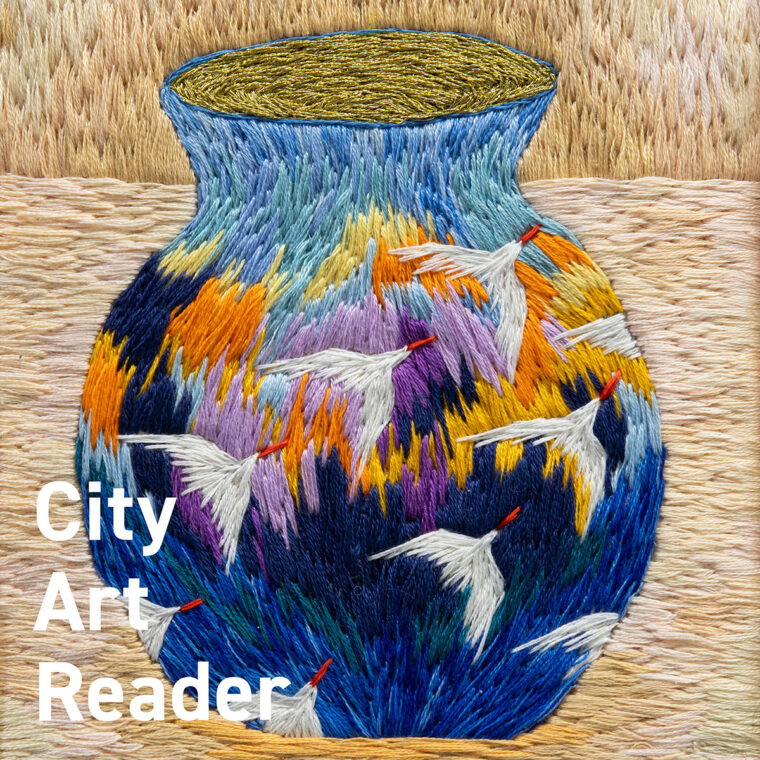
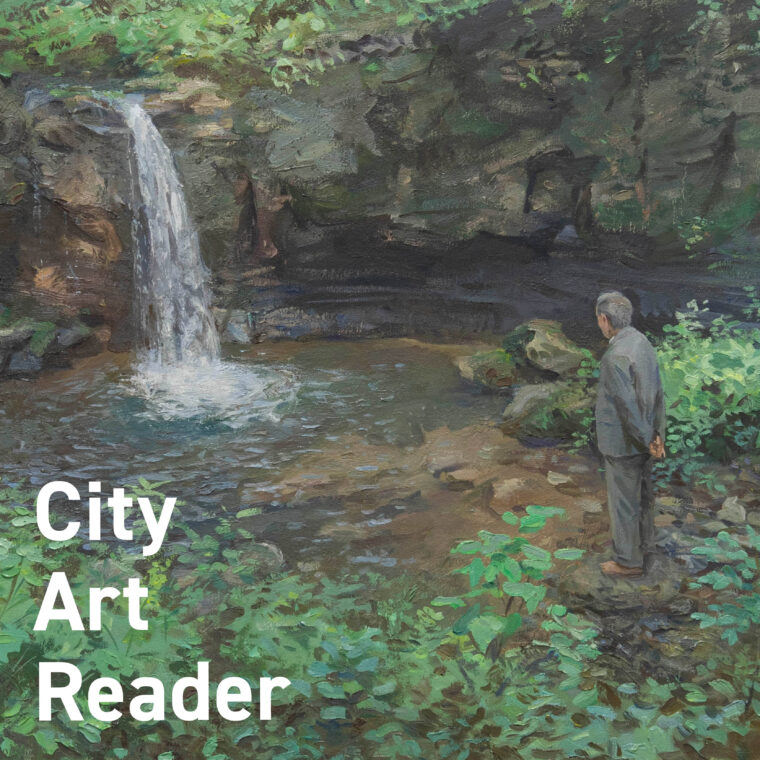
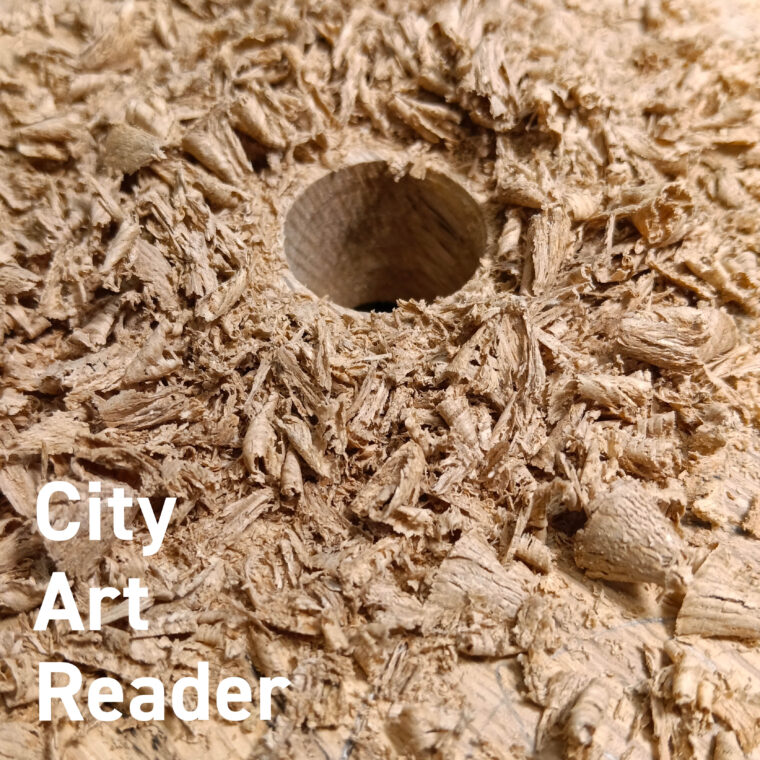
Tahlia King (Kāi Tahu and Ngāti Maniapoto) is an Ōtautahi Christchurch artist and sculptor. In her work she applies traditional techniques of stitching and weaving to contemporary art practice and concepts of contemporary life and crises. Ahead of her exhibition at City Art Depot, she spoke with City Art Reader editor Cameron Ralston. Bumps in the Road opens 5:30pm Tuesday 13 October and runs through to the 9th of November 2026.
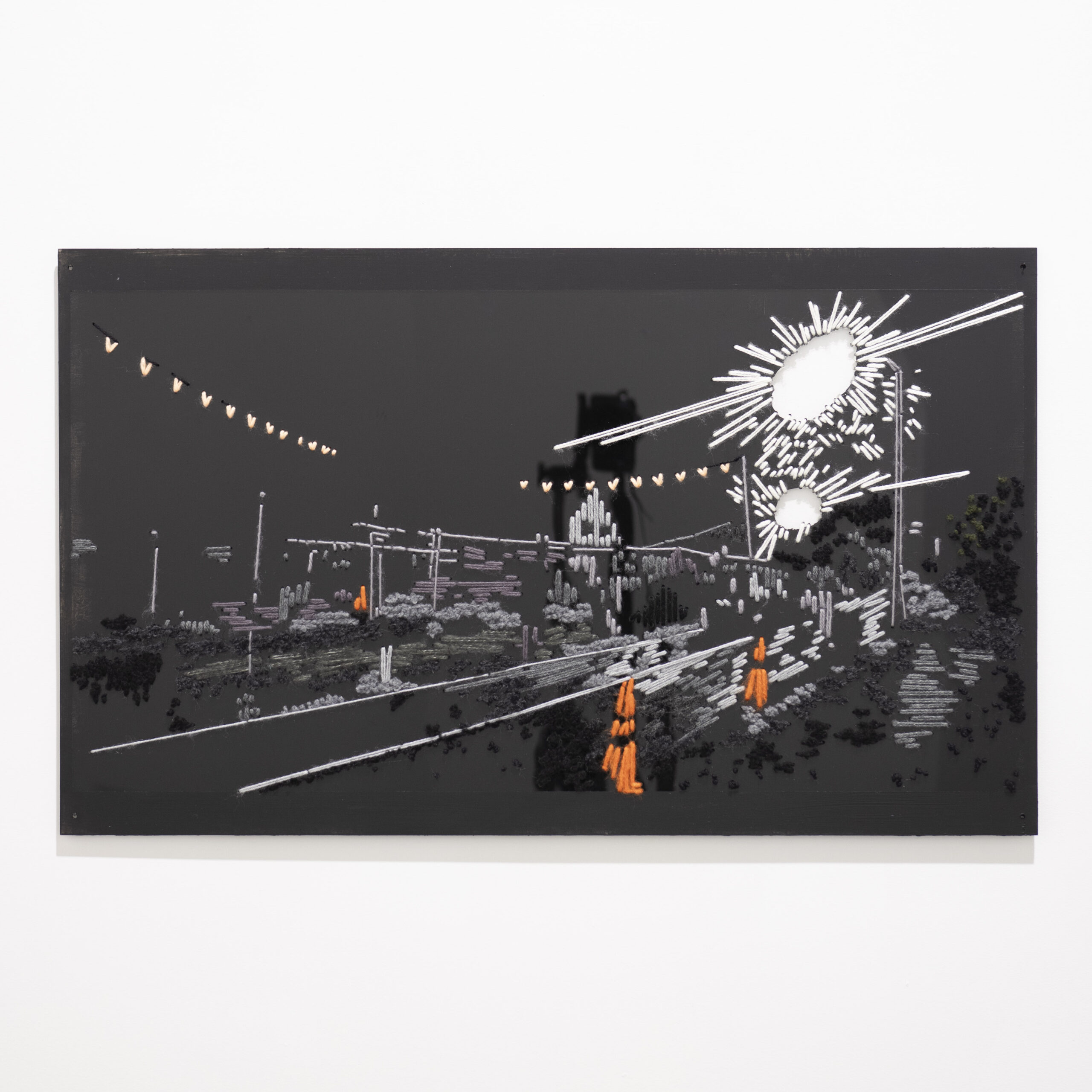
Expect Delays, acrylic perspex, wool, yarn, paint, 480x800mm, 2026
Cameron Ralston: You’re working within the similar themes to your previous exhibition at City Art Depot Red Sky Warnings, but these feel like somewhat of a return to the work that you were doing for your Masters. In one case the work shares a title, ‘Trolley 2’. Is there a reason or rationale for that returning?
Tahlia King: I think the reason I focus on these things, is that there’s a lot of focus in New Zealand on our landscape and our beautiful nature. But we don’t tend to stop and look at the things we deal with every day. Our daily lived experience gets hidden away behind all the beautiful landscapes and scenery.
Events like floods would previously have been something that shaped our existence for quite a while, but we tend to gloss over them these days and move quite quickly through them.
Your work has much more of a closer relationship with documentary photography than it does with painterly depictions of landscapes.
It’s very much about capturing what we’re dealing with right now. I can’t really plan my shows very far ahead because they are about what’s happening to us right now as much as I can. My work documents our reality as we’re facing it every day.
There’s something about committing that acknowledgement of reality into a work like this, which contains a lot of labour and material presence. Do you consider the kind of eternalising that occurs in making an artwork?
I started thinking about old tapestries, like the Bayeux Tapestry and how people used to put a lot of time and effort into preserving these moments that happened previously. By focusing in, and spending say three or four weeks per work, stitching them, drilling them, doing the work, it really makes you have to stop and focus on that one thing.
So, each work represents a slightly different crisis. Whether that’s the cost of living crisis, infrastructure crisis or the climate crisis, every one of the works has that time built into it to dedicate to think about these things. Hopefully by capturing them as snapshots of our daily lives, it lets people stop and actually think about it as well.
There is a strong social and political aspect to your work. Do you consider the context of the gallery in relation to the message within the pieces?
Yeah, things like a supermarket trolley or a petrol station aren’t really what you would think would become an artwork in a traditional sense. And it’s perhaps challenging to represent New Zealand by the difficulties that we face. But by bringing them into the gallery space, the audience has their own experience reflected back at them. These are shared experiences. They see themselves standing in the shopping queue or driving to the store. It’s those moments that we gloss over and remove from our daily lives that don’t normally get immortalised and they don’t normally get reflected on. As an artwork and in a gallery space, it allows for the time to reflect and consider things more deeply. We are connected by these things, you know.
I guess, especially at the moment, the cost of living crisis is something we all are feeling.
When I was getting this show ready, I was concerned about glorifying or taking that focus on these issues that we’re facing. I was kind of struggling with thinking that I’m reflecting these things back at the audience who are already dealing with them in their everyday lives. But I came to that point of, well, if we don’t stop and pause and look at them, in time they are going to get ignored or looked over. They’re going to be considered just bumps in the road that just happened and we carry on, when they are much bigger than that.
And they have lasting effects and consequences.
The issues you bring up in your exhibition are brought sharply into the public eye by the current election lead up, with election day happening during your show.
It’s quite a loaded time, we’re kind of living through all these things and the pressure’s on.
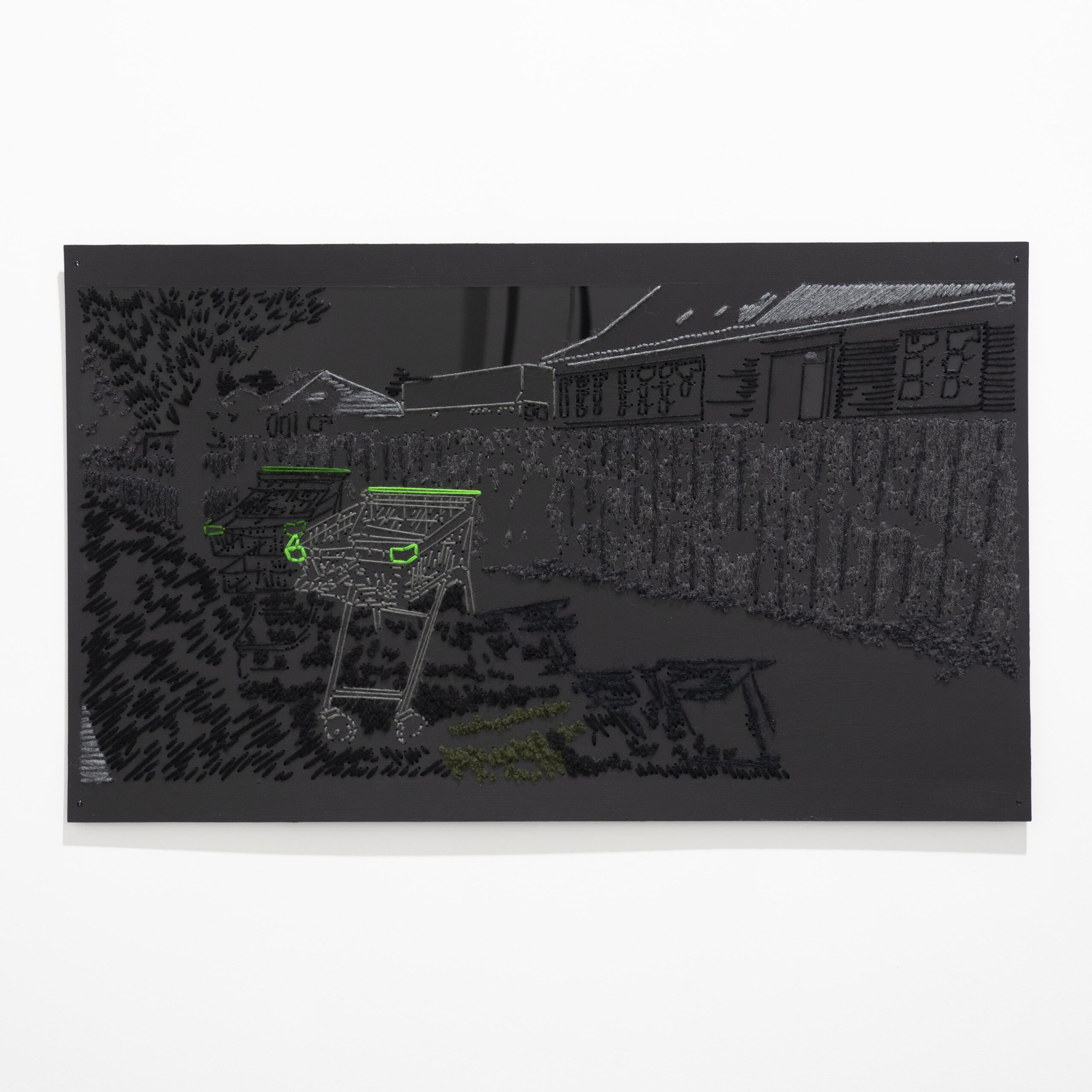
Cost of Survival (Trolleys 2), acrylic perspex, wool, yarn, paint, 480x800mm, 2026
Are you depicting real locations?
They are of East Christchurch. Looking at Linwood, Woolston and Waltham. It’s pretty much around where I live, where I shop, my sort of local areas.
Does sharing that local context have an important meaning?
We don’t often see this part of our lived experience reflected back at us. It’s those in-between times, the streets we navigate when going home or to do the shopping, that we tend to just forget. These are not glamourous parts of life. But moments like pulling into your street after a long day do matter. But again, especially in New Zealand, we don’t see our urban life depicted very much. As someone who just lives a few blocks away in the middle of town, I’m not out exploring the great New Zealand outdoors. Our daily lives are kind of the commute to work and the shopping and picking up the kids, and it’s not the beautiful imagery we are exposed to.
In the acrylic you are quite literally using a reflective, mirroring material.
Because I make work that doesn’t have any humans in it, by using reflection, it lets me bring the people back into it. But it’s the people who are viewing it at the time. So even though they’re still kind of removed from the scene, even just that little bit of reflection, brings them in whether or not they relate to it specifically.
In your Red Sky Warnings exhibition, you talked about an aspect of hopefulness through hard times. Is it right to think that’s less easy to locate in this show? Is that a reflection of the times?
I made these works at the start of the year when we had a cluster of crises, one after the other. We had the flooding here, up north there was the landslides, the wars overseas and the oil crisis was kicking off. And it just became, I don’t know, just like this cluster of things that we were living through. It did get very dark and it did feel hopeless. The aspect of hope is something I always try to remember, especially when focusing on things like this. That this is just now and not forever. But sometimes the reality is, even if the sun came out on these images, it’s still a petrol station, it’s still a half-built road or a flood. It’s still something that is going to take a while to clean up.
But we’re in that moment of in between. Before things get better, like there’s the Māori perspective on things which is that being in darkness is potential. So being in the dark and that darkest moment, before the dawn, is when the most can happen. It’s when the shadows are starting to form around you, you’re starting to get an idea of what’s happening and then the morning breaks. Life starts again, everything comes together. We’re still in the potential, you know?
Do you think there’s a sort of level of acceptance to your work?
Yes, we can’t look away from these things. They are happening.
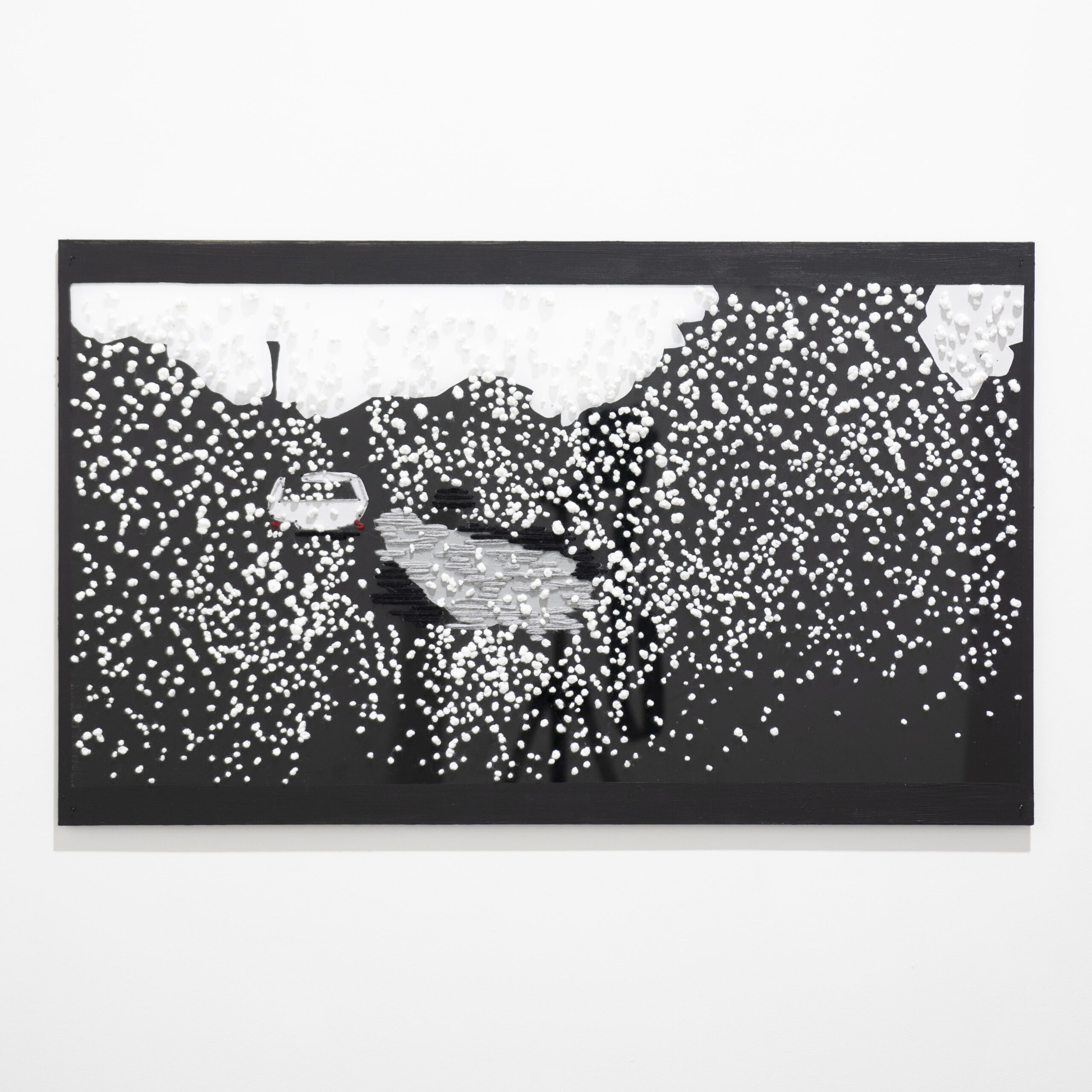
Waking up in Cars, acrylic perspex, wool, yarn, paint, 480x800mm, 2026
It’s worth acknowledging that the crises you bring up affect certain communities more than they do others. There’s kind of no denying that the areas that you’ve chosen to represent are areas of our city where people live who will be more disproportionately affected by things like rising costs and adverse weather.
Yeah, absolutely. Part of it is trying to represent those people in those situations where they won’t normally see themselves on the gallery walls. They don’t see things that feel familiar, they don’t see their daily experience of running to the shops in there because it’s considered a non-exceptional kind of thing. But when you’re in those lower socioeconomic environments, if you don’t do those daily things, it causes chaos in your life. You’re not going to get through whatever challenges you’re facing, you know?
Is there a relationship between the materials that you’re working with and the images and messages that you’re working with?
Both plastic and wool have such strong emotional connections to different things. The comfort, warmth and homeliness of a textile gets almost completely removed by the plastic. It’s such a damaging industrial product. But it is kind of that representation of our daily lives. We’re stuck in the structure of this plasticky world that we can’t do anything about. In this case, it is the textiles and the wool that remind us of those comforts and the things that are sort of outside the structured industrial world. It doesn’t matter that it’s in this muted palette, we still feel comfort from it. But there’s no comfort whatsoever from the plastic. So, it’s a quite literal representation of that contrast in our life, the looking for and wanting the comforts of life and then the challenges of modern existence.
Yeah, plastic can be quite an instinctively repulsive material. I’m reminded of Richard Wilson’s 20:50 artwork, where a room is filled waist high with oil creating a slick black mirror. I saw it installed at Mona in Tasmania, being in that room feel so repulsive but also mysterious. Such contrasts make you aware of your own body. I see a similar material honesty and presence in your work too.
I can’t get away from how strongly we feel about plastic. It’s almost something I just have to embrace and make best use of. It becomes a feature because it’s quite confronting to deal with an artwork that’s made out of plastic. Like it’s not immediately appealing, but it connects to our emotions. And that’s what I need it to do.
Even though we’re talking about the negative aspects of the material itself, the works have an aesthetic quality that runs through. There is intrigue and pleasure in your art. In the way you’ve created line, texture and colour. I’m interested in that balance you strike in making something the eye wants to behold and engage with.
It is a challenge when dealing with these kinds of materials. It is a fine balance with the subject matter; it is dark stuff to want to make something beautiful from. How inviting, or how engaging it is, when it is a topic that you’re trying to point out as a fault or something to be fixed. Or something that we just straight up don’t like, like you said, the oil of it all.
I think the texture and invitation of the wool do successfully blur that boundary between approachability and the uncomfortable. I’m trying to soften it in a way and connect on an emotional level with the audience.
Have you changed anything about your process in the making of these works. I notice these white knots across some of the works like Help yourself.
I always try and push the process and experiment for every new show, whether it is introducing more painting or trying new techniques like the little dots – finding new ways of representing form with the materials to create a kind of emotional connection or a different sensation.
The white knots are about looking through something onto a scene. Like a window or pane of glass. It’s an element of obscuring and separation. They build up a unique kind of tension.
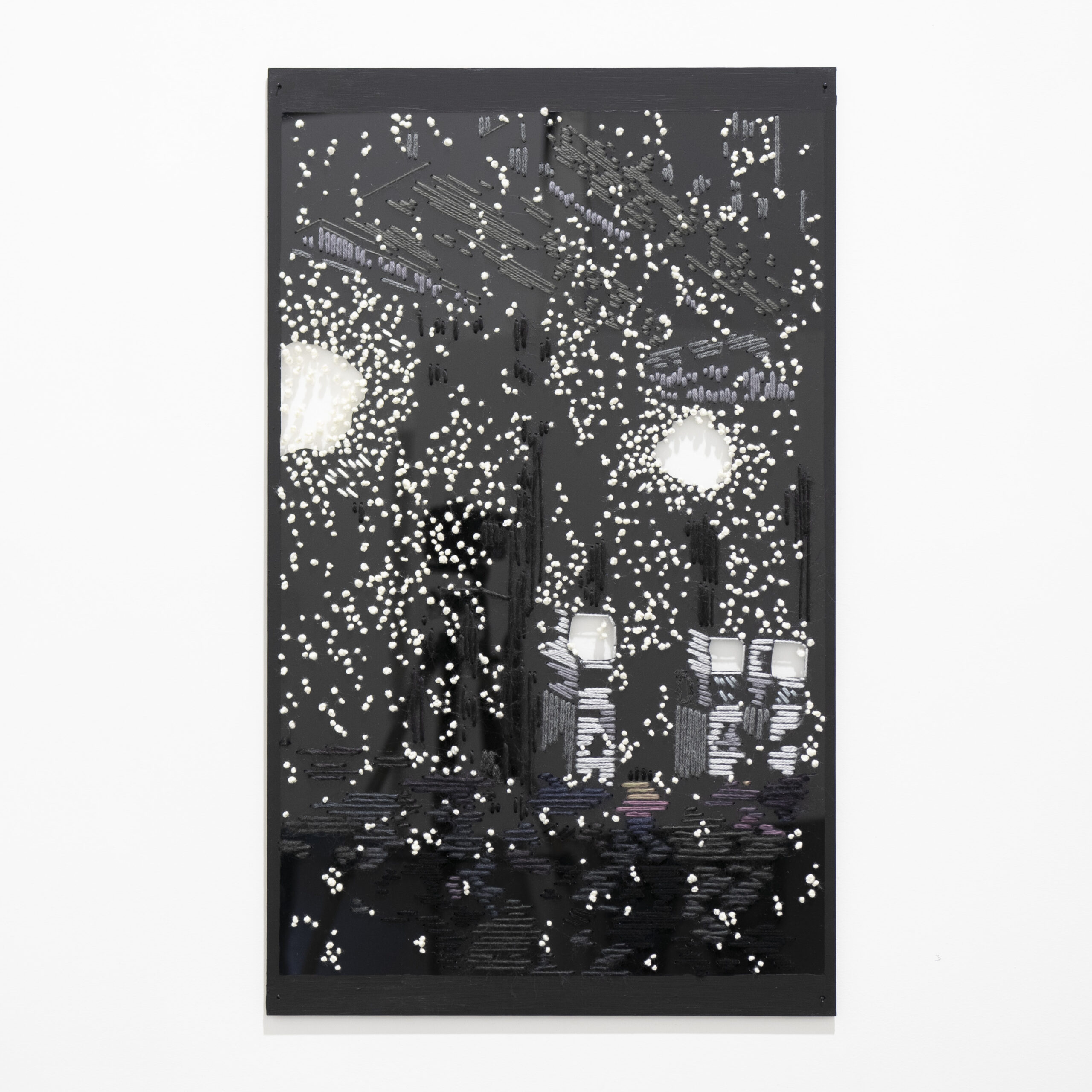
Help yourself, acrylic perspex, wool, yarn, paint, 800x480mm, 2026
You’ve done interesting things with colour again too. You use unnatural neon colours – greens, oranges, blues. Is this a reference to contemporary life and materials?
That’s the man-made industrial aspect of it all. That is Woolworths green. That is road cone orange. You only get that kind of garish neon blue at a petrol station or on a billboard. These things don’t regularly occur in nature.
Were you influenced by, or engaged in, other artists’ works or different art mediums when making this exhibition?
I was watching a lot of the old black and white noir film. And looking at black and white photography, researching what kinds of things we actually document as people, and how we do that. Historically events like flood, famines and poverty would be marked by artists. But I feel like because they just happen so fast these days, we don’t really get the chance.
I’m interested to hear how you approach the abstraction in your works. There is a strong use of building in and omitting details that occurs in each piece.
For me, abstraction is definitely a process. By starting with photography and just capturing a scene straight as it is, abstraction allows me to pull back to the most important elements of an image. There is a need to have negative and positive detail. It can depend on how representational the photo is to begin with. Sometimes the emptiness of the image is important, the scale of the forms – it really comes down to all those compositional decisions. I want the scenes to be familiar but not too recognisable because I feel the meaning gets a little lost. So by abstracting and pulling it back, it’s kind of putting the space back for the viewer to fill in the gaps.
I know a lot of artists aim for this idea of universality through omission of details or obscuring references – choices through which the artwork reaches a point where they feel like someone could put themselves within and fill out.
Looking back at my Masters, part of the reason I started with abstracting these forms in this way was because I don’t necessarily want the viewer to know exactly what the work is about or what it is of. Like the Eastgate Countdown for example – not knowing that gives the viewer a chance to think, that location makes sense with that feeling and for those people who are in that space; are people at my shops feeling like this? Is this my shops and I don’t realise that’s what it feels like to other people? Even stripping the names off it means the viewers can put themselves into it. This could well be the corner of your block or the petrol station you use.
You achieve this by omitting place names from your titles too. Instead, you use evocative titles. Waking up in Cars is quite a potent example.
It was actually easier to give these artworks titles than it has been before. I think because they’re more direct. Waking up in Cars, you can’t avoid what that means. You don’t tend to wake up in cars for good reasons. It became more important with the titles to really just drill down and make a point of what these are actually about. I don’t want people to miss socio-political things. I wanted there to be some recognition that this is about the crises we are living through.
Do you think that these conditions that we’re living in have become a crisis, as much as a flood?
Unfortunately, yes. I think there is something worth understanding about our lived experiences – something in sitting at lights or people not taking a trolley back, that we usually gloss over. There are still important things to get out of these experiences. Something in stopping and thinking about how we live in this time, and what are we going to do if we just treat them like bumps in the road?